
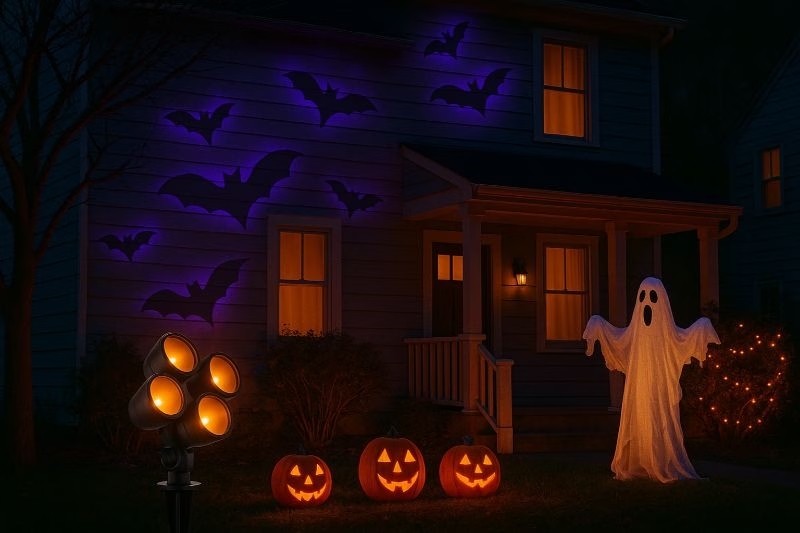
Halloween outdoor lighting works best when it does more than make the yard bright. The right setup creates shadows, guides trick-or-treaters safely to the door, highlights decorations, and gives the house a completely different character after dark.
You do not need to cover every surface in lights. A few carefully placed lights around the porch, walkway, trees, windows, and Halloween props can create a stronger effect than simply adding more bulbs.
This guide covers practical Halloween outdoor lighting ideas for different parts of the yard, along with color choices, placement tips, power options, and a few important safety considerations.
Start With the Mood You Want to Create
Before buying more Halloween lights, decide what kind of atmosphere you are trying to create.
A family-friendly display might use warm orange string lights, glowing pumpkins, pathway lights, and softly illuminated characters. A darker haunted-house setup can rely more heavily on purple, deep red, green, narrow spotlights, and moving shadows.
For a dramatic display, contrast is usually more effective than brightness. Leaving some areas dark allows your illuminated decorations to stand out.
If you are still deciding between classic Halloween colors, our guide to purple and orange LED lights for Halloween explains how the two colors create very different effects.
1. Light the Walkway Without Making It Too Bright
The path to the front door is one of the most useful places to start.
Small pathway lights can make steps and edges easier to see while also becoming part of the Halloween display. Instead of using normal white landscape lights at full brightness, consider orange, amber, purple, or color-changing lights.
Good options include:
- Low-profile LED pathway lights
- Battery-operated pumpkin lights
- Solar lights with orange or purple output
- Small lantern-style lights
- Glowing stakes shaped like ghosts, pumpkins, or skulls
Keep the center of the walkway open. Lights and decorations positioned along the edges are less likely to become obstacles when children are approaching the house.
2. Use Uplighting to Transform Trees
A tree that looks ordinary during the day can become one of the most dramatic parts of a Halloween display at night.
Place a small outdoor spotlight near the base and aim it upward into the trunk and branches. Purple, green, red, or cool white can all produce different effects.
For an eerie look, try lighting the tree from only one side. This creates stronger shadows instead of evenly illuminating the entire canopy.
You can also combine uplighting with lightweight hanging decorations such as ghosts, bats, or skeletons. The moving decorations cast additional shadows when there is a breeze.
3. Wash the Front of the House With Color
You do not necessarily need strings of lights across the entire facade.
One or two outdoor floodlights or spotlights can cover a surprisingly large wall area. Pointing a purple, orange, red, or green light toward siding or brick can change the appearance of the entire house in seconds.
Try illuminating architectural features rather than the whole building:
- Front columns
- Entryway arches
- Garage doors
- Brick walls
- Tall shrubs
- Large trees beside the house
If the rest of the yard remains relatively dark, these illuminated sections become natural focal points.
4. Make the Porch the Main Halloween Scene
The porch is usually where visitors spend the most time, so it deserves more detailed lighting than the rest of the yard.
A layered setup often works better than a single bright porch fixture.
For example, you might combine:
- Warm orange string lights around the doorway
- Battery-operated candles inside pumpkins
- A purple spotlight behind a skeleton or prop
- Small lanterns near the steps
- A dim overhead porch light for practical visibility
This gives the display depth while still keeping the entrance usable.
5. Put Lights Behind Halloween Props
One of the simplest lighting tricks is to hide the light source.
Instead of pointing a spotlight directly at a skeleton, tombstone, ghost, or inflatable, try positioning the light behind it.
The decoration becomes a silhouette and may cast a large shadow onto a wall, garage door, fence, or tree.
This technique works particularly well with:
- Skeletons
- Artificial tombstones
- Large spiders
- Ghost figures
- Bare tree branches
- Window silhouettes
Experiment with distance. Moving the light closer to the decoration generally creates a larger shadow.
6. Use Projection Lights for Fast Coverage
Projection lights are useful when you want to cover a garage door, wall, or large section of the house without hanging dozens of individual lights.
Some project moving ghosts, pumpkins, bats, or abstract patterns. Others create a simple colored or animated background.
The main advantage is setup speed. One projector can cover an area that might otherwise require several strings of decorative lights.
The trade-off is control. Projection images may look less convincing on highly textured walls, windows, trees, or surfaces interrupted by architectural details.
We compare the two approaches in our Halloween projection lights vs traditional decorations guide.
7. Create Glowing Windows
Windows allow you to create Halloween effects without putting every decoration outdoors.
Place orange or purple lights inside the room and keep the main room lights switched off. From outside, the whole window can take on a dramatic glow.
You can add silhouettes of witches, bats, monsters, or hands against the glass for an inexpensive effect.
Curtain-style LEDs can also work well in larger windows, particularly when paired with black paper or lightweight silhouettes.
8. Wrap Small Trees and Shrubs
String lights are still useful for Halloween, but they do not need to look like Christmas lighting.
Instead of perfectly wrapping every branch, try loosely weaving orange, purple, or green lights through shrubs and smaller trees.
Black-wire light strings are especially useful when you want the cable to disappear at night.
For trees farther from an outlet, battery-powered lights may make installation easier. Plug-in lights generally make more sense for larger displays that will operate for several hours every evening.
Our battery vs plug-in Halloween lights guide goes deeper into when each option makes sense.
9. Use Flickering Lights Carefully
Flickering LEDs can imitate candles, flames, malfunctioning fixtures, or haunted-house lighting.
They work particularly well inside lanterns, pumpkins, windows, and covered porch decorations.
A little flicker goes a long way. If every light in the display flashes independently, the effect can become visually chaotic rather than spooky.
Use steady lights for your main illumination and reserve flickering effects for a few focal points.
10. Add Light Inside Decorations
Some of the best Halloween lighting is almost invisible during the day.
Small battery-powered LEDs can be placed inside translucent decorations, jars, pumpkins, lanterns, skulls, or hollow props.
This works especially well when electrical outlets are unavailable.
Battery-powered LEDs also eliminate the need to run a cord across a walkway just to illuminate one small decoration.
11. Try a Simple Three-Color Halloween Palette
A common mistake is using too many colors in one display.
Limiting the palette can make the entire yard look more intentional.
Three useful combinations are:
Orange + Purple + Warm White
This is versatile and works well for family-friendly Halloween decorating. Orange provides the traditional seasonal feel, purple adds contrast, and warm white keeps important areas visible.
Red + Purple + Cool White
This combination creates a darker haunted-house appearance and works particularly well with skeletons, tombstones, and bare branches.
Green + Purple + Orange
This is brighter and more playful. It works well with witches, monsters, slime-themed decorations, and colorful props.
12. Don’t Forget the Backyard or Patio
If you are hosting a Halloween party, lighting does not have to stop at the front yard.
A patio can use a different lighting style from the trick-or-treating area.
Try dim string lights overhead for general visibility, then add colored accent lights around walls, plants, tables, or decorations.
Portable lanterns and battery-operated lights are also useful around seating areas where cords would be inconvenient.
Battery, Solar, or Plug-In Halloween Lights?
There is no single best power source for every Halloween display.
Battery-Powered Lights
Battery lights are convenient for pumpkins, wreaths, windows, small trees, props, and areas far from electrical outlets. Look for timer functions if you do not want to manually switch many individual decorations on and off every evening.
Solar Lights
Solar lighting avoids extension cords, but performance depends on how much sunlight the panel receives during the day. Autumn weather, shorter days, trees, and shaded yards can reduce charging performance.
Plug-In Lights
Plug-in lighting is generally the easiest choice for larger displays and high-output spotlights, projectors, inflatables, and long strings of lights.
The downside is cable management. Plan your layout before decorating so cords do not cross busy walking areas unnecessarily.
Halloween Outdoor Lighting Safety
Halloween displays combine darkness, electrical equipment, decorations, children, and increased foot traffic, so lighting placement matters as much as appearance.
- Use lights and electrical decorations specifically rated for outdoor use when they will be exposed outdoors.
- Inspect light strings, plugs, sockets, and extension cords before installation. Do not use damaged electrical equipment.
- Use extension cords rated for the environment and electrical load.
- Outdoor electrical decorations should use appropriately protected outlets, including GFCI protection where required.
- Keep cords away from areas where trick-or-treaters are likely to walk.
- Use clips or hooks designed for hanging lights rather than damaging wires with nails or staples.
- Keep dried leaves, paper decorations, fabric, and other easily combustible materials away from heat sources.
- Consider battery-operated LED candles instead of open flames inside pumpkins and lanterns.
- Keep doorways, steps, walkways, and exits clear.
- Turn electrical decorations off when they are unattended or when you go to bed.
A Halloween display can look deliberately dark without making the walking route difficult to see. Keep steps, level changes, and obstacles visible while allowing the decorative areas around them to remain moodier.
A Simple Halloween Lighting Plan
If you are starting from scratch, you do not need to buy everything at once.
A practical small-yard setup could be:
- Orange or purple pathway lights leading toward the house.
- One colored spotlight illuminating a tree or front wall.
- String lights or battery lights around the porch.
- Battery-operated LEDs inside pumpkins.
- A backlight behind one large Halloween decoration.
That is already enough to create multiple layers of light and several focal points.
You can then add projection lights, window lighting, illuminated props, or additional landscape lights in future seasons.
Final Thoughts
The most effective Halloween outdoor lighting does not necessarily use the most lights. It uses darkness, color, direction, and contrast to make a few areas stand out.
Start with the route visitors will use, then add one or two focal points around the house or yard. Use brighter practical lighting where people need to walk and more dramatic colored lighting around decorations, walls, trees, and props.
With a little planning, even a relatively simple collection of LEDs, spotlights, and battery-powered decorations can turn an ordinary yard into a Halloween display that looks far more elaborate after sunset.
For more seasonal setups and product guides, browse our Event Lighting guides.
2 Comments