
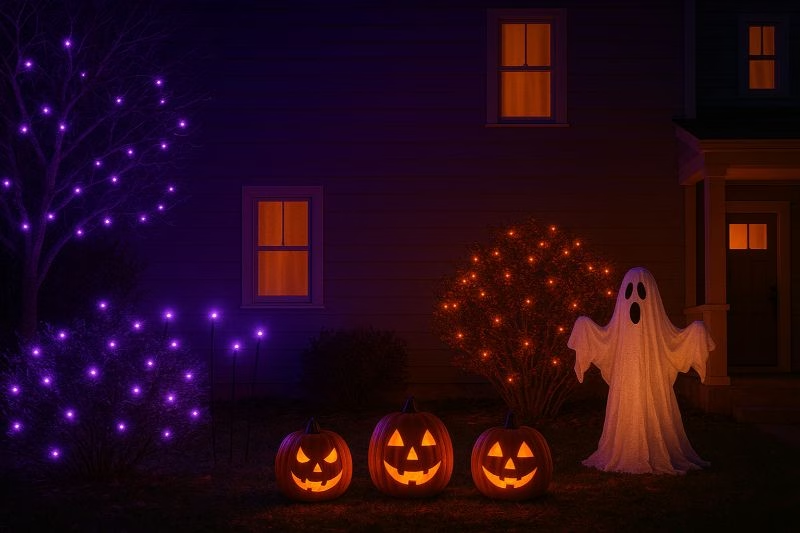
Purple and orange LED lights are one of the easiest ways to make a home feel unmistakably Halloween-ready after dark.
Orange gives a display the familiar glow of pumpkins, candles, autumn leaves, and firelight. Purple adds contrast and creates a darker, more mysterious atmosphere. Used together, the two colors can work for everything from a family-friendly porch to a much moodier haunted-yard setup.
The trick is not simply buying purple and orange lights and covering everything with them. Placement, brightness, surrounding darkness, and the type of fixture matter just as much as the colors themselves.
This guide explains how to use purple and orange LED lights effectively around porches, pathways, windows, trees, walls, and indoor Halloween displays.
Why Purple and Orange Work So Well for Halloween
Orange already has a strong connection with Halloween because it appears naturally in pumpkins and autumn decorations. It also creates a warmer, more welcoming glow than many saturated colors.
Purple does something different. It creates contrast against orange and can make walls, plants, props, and shadows look more dramatic after dark.
Together, the two colors give you both sides of Halloween decorating:
- Orange for warmth, pumpkins, pathways, and traditional seasonal atmosphere
- Purple for shadows, haunted effects, backlighting, and stronger contrast
That contrast is why the combination often looks more interesting than covering the entire yard in one color.
Orange Lights Work Best as the Warm Base Layer
Think of orange as the color that establishes the overall Halloween atmosphere.
It works particularly well around places where you want the display to remain inviting and easy to understand visually.
Useful locations include:
- Front doors and porch railings
- Walkways
- Pumpkins and lanterns
- Window frames
- Small shrubs
- Outdoor dining or seating areas
Warm orange lights can also replace some of the ordinary white lighting around the front entrance during Halloween week.
You do not necessarily need extremely bright orange LEDs. For decorative use, softer light often produces a better result because it allows illuminated pumpkins and props to remain visible without washing out the whole scene.
Purple Lights Are Better for Drama and Contrast
Purple becomes especially effective when it is used selectively.
A purple spotlight aimed at a wall, tree, shrub, skeleton, or ghost can create a much stronger effect than wrapping every surface in purple string lights.
Good places for purple lighting include:
- Behind Halloween props
- At the base of trees
- Against exterior walls
- Behind translucent decorations
- Inside windows
- Around artificial spider webs
Because purple is visually distinct from the warm orange layer, even a relatively small purple light source can become a strong focal point.
Use Orange in Front and Purple in the Background
One of the simplest ways to create depth is to separate the colors physically.
For example:
- Orange pathway lights near the front of the yard
- Purple uplighting on a tree farther back
- Orange pumpkins on the porch
- Purple light behind a skeleton beside the door
This keeps the display from becoming a flat wall of mixed color.
The viewer sees several layers instead, which can make even a small front yard feel more carefully designed.
Purple and Orange Porch Lighting Ideas
The porch is a good place to combine both colors because visitors will see it from a relatively short distance.
A simple setup could use orange string lights around the doorway and a purple spotlight aimed at one side of the porch.
Other combinations include:
- Orange lanterns with purple backlighting
- Purple string lights around railings with orange pumpkins below
- Orange candles or LED candles with a purple-lit wall behind them
- Purple window glow with orange lights around the entrance
- Orange step lights with purple Halloween props near the door
Try to keep the practical walking areas visible. Halloween lighting can be atmospheric without making steps or level changes difficult to see.
For a broader yard layout, see our Halloween outdoor lighting ideas.
Use Purple Uplighting on Trees
Trees are especially effective with purple lighting because the branches naturally create irregular shadows.
Place an outdoor-rated spotlight near the trunk and aim it upward.
You can make the result more dramatic by lighting only one side of the tree rather than trying to illuminate every branch evenly.
Then add a small amount of orange lighting closer to the ground.
For example, orange pumpkins or pathway lights beneath a purple-lit tree create a clear two-color composition without requiring a large number of fixtures.
Try Orange Lights Around Pumpkins
Orange lighting and pumpkins naturally work well together, but the lights do not always have to go inside the pumpkins.
You can also place small orange LEDs:
- Behind a row of pumpkins
- Around the base of a pumpkin display
- Inside nearby lanterns
- Along shelves or steps holding pumpkins
- Under lightweight translucent decorations
A purple light behind the entire arrangement can then separate it from the background.
Create a Purple Halloween Window Glow
Windows are one of the easiest places to create dramatic color without exposing electrical decorations directly to the weather.
Switch off the normal room lights and place a purple lamp, LED strip, or string light inside the room facing toward the window.
From outside, the glass takes on a strong purple glow.
You can add:
- Black paper silhouettes
- Spider-web decorations
- Ghost shapes
- Bat cutouts
- Skeleton figures
Then use orange lights outside around the window or beneath it.
This creates a layered effect without requiring complicated installation.
Orange and Purple Pathway Lighting
Alternating colors along a pathway can look festive, but perfect orange-purple-orange-purple repetition is not always necessary.
A more natural approach is to use orange for most of the walkway and introduce purple only at key points.
For example:
- Orange pathway stakes along the route
- Purple lights near tombstones or props
- Purple uplighting at the end of the path
- Orange lights close to steps or the front entrance
This keeps the pathway readable while still creating visual surprises.
Use the Colors Behind Skeletons and Ghosts
Backlighting can often make Halloween props more dramatic than lighting them directly from the front.
Place a purple light behind a skeleton, ghost, tombstone, or spider so the decoration appears partly in silhouette.
If the prop is near a wall, the light may also cast an enlarged shadow.
Orange lighting can then be placed nearby at ground level to create separation between the prop and the rest of the display.
String Lights vs Spotlights
Both can work well, but they serve different purposes.
Orange and Purple String Lights
String lights are useful when you want to outline or decorate a structure.
They work well around:
- Porches
- Railings
- Windows
- Fences
- Small trees
- Shrubs
They create lots of small points of light rather than illuminating an entire surface.
Orange and Purple Spotlights
Spotlights are better when you want to change the color of a larger object or surface.
They are particularly useful for:
- Walls
- Large trees
- Garage doors
- Halloween scenes
- Large props
- House facades
For many yards, a combination of both works best.
Should You Use Steady or Flashing Lights?
Steady lighting is usually easier to design around because it creates a consistent base layer.
Flashing, flickering, or color-changing lights can then be added as accents.
If everything flashes at a different rhythm, individual decorations become harder to distinguish.
A balanced setup could use:
- Steady orange pathway lighting
- Steady purple wall wash
- Flickering orange pumpkin lights
- One moving or color-changing Halloween effect
This keeps the display lively without making every part compete for attention.
Orange, Purple, and Warm White
You do not have to limit the display to only two colors.
Warm white is a particularly useful third color because it can provide practical illumination without clashing strongly with orange.
Try:
- Orange decorative lights
- Purple accent lights
- Warm white around steps, doors, or seating areas
This is especially useful for family-friendly displays where people still need good visibility around the entrance.
Orange, Purple, and Green
Adding green creates a brighter and more playful Halloween palette.
It works especially well with:
- Witch-themed decorations
- Monster displays
- Slime effects
- Artificial cauldrons
- Fog effects
Use green sparingly if purple and orange are supposed to remain the main colors.
Orange, Purple, and Red
Red can make the display feel darker and more dramatic.
This combination is better suited to haunted-house themes than cheerful pumpkin displays.
For example, use orange around the entrance, purple on trees or walls, and a small amount of red behind a specific prop.
The red becomes much more noticeable when it is not used everywhere.
Battery-Powered or Plug-In Purple and Orange Lights?
Battery-powered lighting is particularly useful for Halloween because decorations are often positioned in places where outlets are inconvenient.
Battery-powered lights work well for:
- Pumpkins
- Wreaths
- Small props
- Tables
- Windows
- Individual shrubs
Plug-in lighting usually makes more sense for:
- Long string-light runs
- High-output spotlights
- Projection lights
- Large trees
- Whole-house displays
If you are deciding between the two, read our battery vs plug-in Halloween lights guide.
Can You Use Smart Color-Changing Lights?
Yes. RGB and other color-changing lights can make it easy to switch between purple, orange, red, and green without installing separate fixtures for each color.
They are especially useful for spotlights and wall washes.
However, a constantly changing rainbow effect may weaken a carefully designed Halloween palette.
If your goal is specifically purple and orange, use a static color or a slow transition rather than rapidly cycling through every available color.
How Bright Should Halloween Lights Be?
Halloween lighting usually benefits from lower brightness than ordinary task lighting.
If a purple spotlight is so bright that it illuminates the entire yard, you lose many of the shadows that make Halloween lighting interesting.
Start lower than you think you need and increase brightness gradually.
Some areas should remain dark.
Use more light around:
- Steps
- Walkways
- Doorways
- Changes in ground level
Use less light around purely decorative areas where shadows are part of the effect.
A Simple Purple and Orange Setup for a Small House
You can create a complete display with relatively few lights.
For example:
- Place orange LEDs around the front doorway.
- Add orange lights inside or around several pumpkins.
- Use one purple spotlight on a tree or exterior wall.
- Place a second purple light behind your main Halloween prop.
- Use subtle orange pathway lights leading toward the porch.
This gives you a warm foreground, darker purple background, and a clear focal point without covering every part of the property.
A Larger Purple and Orange Yard Setup
For a larger display, divide the yard into zones rather than treating everything as one scene.
Zone 1: Walkway
Use orange pathway lighting with occasional purple accents.
Zone 2: Trees and Landscaping
Use purple uplights on larger trees and orange string lights in selected shrubs.
Zone 3: Porch
Use orange around the doorway and purple behind major props.
Zone 4: Windows
Create purple interior window glow with orange details around the exterior.
Zone 5: Main Halloween Scene
Combine both colors around skeletons, tombstones, ghosts, or another large focal decoration.
Using zones also makes it easier to expand the display gradually from one year to the next.
Common Mistakes to Avoid
Using the Same Brightness Everywhere
A display looks flatter when every fixture produces the same amount of light. Use brighter light for focal points and lower brightness for background areas.
Mixing Too Many Colors
Adding every available RGB color can quickly make a carefully planned purple-and-orange theme disappear.
Ignoring the Existing Porch Light
A very bright white porch fixture can overpower decorative colored lighting. If practical and safe, use a lower-intensity porch setting or let warmer lighting handle part of the entrance illumination.
Putting Lights Directly in Walking Areas
Keep fixtures and cables away from the path trick-or-treaters will use.
Lighting Every Surface
Darkness is part of Halloween lighting design. Leaving gaps makes illuminated areas more noticeable.
Outdoor Lighting Safety
When using purple and orange lighting outdoors, treat decorative LEDs like any other exterior electrical setup.
- Use products specifically rated for outdoor use when they will be exposed to weather.
- Check cables, plugs, sockets, and housings for damage before installing them.
- Use suitable outdoor extension cords where required.
- Keep electrical connections protected from moisture.
- Avoid placing cords across busy walkways whenever possible.
- Use proper clips or mounting hardware rather than piercing electrical cables.
- Keep lights and electrical equipment away from highly combustible decorations.
- Switch decorations off when they are unattended or no longer needed.
For larger Halloween displays, plan the electrical layout before decorating. That usually results in fewer awkward extension-cord routes later.
Purple vs Orange Halloween Lights: Which Should You Use More?
There is no required ratio, but orange generally works better as the dominant color for traditional Halloween decorating.
Purple is more effective as a contrasting accent.
A simple starting point is to use orange for roughly two-thirds of the visible decorative lighting and purple for the remaining accent areas.
You can reverse that balance for a darker haunted-house display, using purple across walls and landscaping with smaller orange highlights around pumpkins and pathways.
Final Thoughts
Purple and orange LED lights work so well for Halloween because they do different jobs.
Orange creates warmth and immediately signals the season. Purple adds depth, shadows, and a darker atmosphere.
Instead of mixing both colors everywhere, give each one a role. Use orange around pathways, pumpkins, doorways, and welcoming areas. Use purple behind props, on trees, across walls, and anywhere you want stronger contrast.
With thoughtful placement, a handful of lights in these two colors can create a more convincing Halloween display than a much larger collection of randomly placed decorations.
For more ideas, continue with our Halloween outdoor lighting guide or browse the latest Event Lighting guides.
2 Comments