
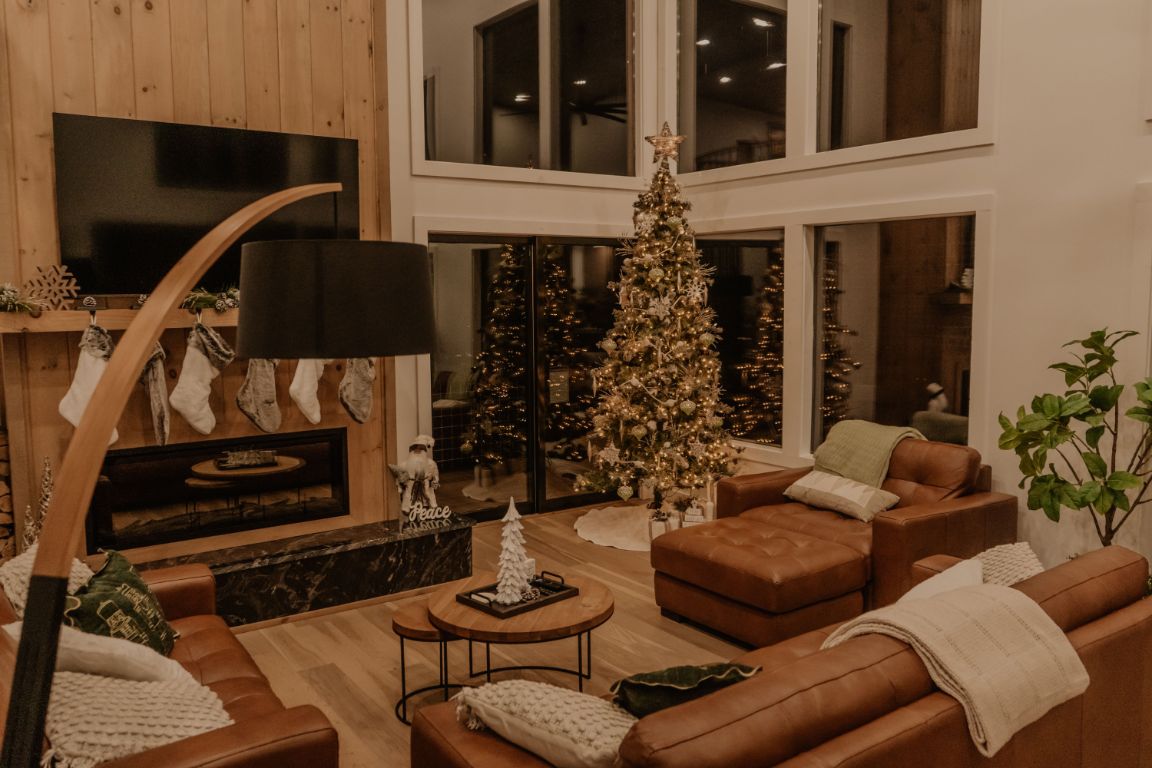
A 7-foot Christmas tree is one of the most common tree sizes for living rooms, but the number of lights you need can vary a lot depending on the shape of the tree and the look you want.
A slim 7-foot tree may need far fewer lights than a wide, full tree. A softly lit traditional tree also needs much less coverage than a dense, sparkling display.
As a practical starting point, many 7-foot trees look balanced with roughly 700 to 1,000 standard mini lights, while brighter or fuller trees may use more.
That number is only a guide. Tree width, branch density, bulb spacing, and how deeply you wrap the lights matter just as much as height.
Quick Answer: How Many Lights for a 7-Foot Christmas Tree?
For a typical 7-foot Christmas tree:
- Light coverage: around 500–700 lights
- Balanced coverage: around 700–1,000 lights
- Very bright or dense coverage: around 1,000–1,400+ lights
If you are using cluster lights, the bulb count can be much higher because the LEDs are packed much more closely together.
For cluster-light setups, focus more on the illuminated length and density than on raw bulb count.
Why There Is No Single Correct Number
Two 7-foot trees can look completely different.
The number of lights you need depends on:
- Tree width
- Branch density
- Whether the tree is slim or full
- Bulb spacing
- Type of lights
- How bright you want the tree
- Whether lights are placed deep inside the branches
This is why simple rules based only on tree height are useful as a starting point, but not as a final answer.
A Simple Rule of Thumb
A practical rule is to start with roughly 100 lights per foot of tree height for moderate coverage.
For a 7-foot tree, that gives you about 700 lights.
From there:
- Use less for a sparse or minimalist look.
- Use more for a fuller or brighter tree.
- Use significantly more if the tree is very wide.
Lights Needed by Tree Style
| 7-Foot Tree Type | Suggested Light Range | Typical Look |
|---|---|---|
| Slim or pencil tree | 400–700 | Clean and lightly illuminated |
| Standard full tree | 700–1,000 | Balanced and traditional |
| Very full tree | 900–1,200 | Rich, even coverage |
| Dense luxury-style tree | 1,200–1,500+ | Very bright and highly decorative |
Tree Width Matters More Than Most People Expect
A narrow 7-foot tree has much less branch area than a wide 7-foot tree.
For example, a pencil tree may only need a few light strings to look complete, while a full tree with broad lower branches may need nearly twice as much lighting.
Before buying lights, check the approximate diameter of the tree at its widest point.
How Branch Density Changes the Number of Lights
A dense tree can absorb a surprising number of lights.
If you place some lights deeper inside the branches, many LEDs will not be visible from every angle at once.
That creates a richer look, but it also means you need more lights overall.
A sparse tree requires fewer lights because each bulb remains more exposed.
How Many Lights for a Slim 7-Foot Christmas Tree?
For a slim or pencil-style 7-foot tree, around 400 to 700 mini lights is often enough.
These trees have less surface area, so excessive lighting can quickly overwhelm the shape.
If the tree is decorated with large ornaments or ribbon, staying toward the lower end can help keep the display balanced.
How Many Lights for a Full 7-Foot Christmas Tree?
A typical full 7-foot tree often looks good with around 700 to 1,000 mini lights.
This gives enough coverage to weave lights into the branches without leaving large dark areas.
If the tree is especially wide or dense, moving toward 1,200 lights can create a fuller effect.
How Many Lights for a Sparse 7-Foot Tree?
A sparse tree may only need around 500 to 700 lights.
Because more of each light string remains visible, fewer bulbs can still produce a strong effect.
Sparse trees also benefit from placing lights close to the trunk so the inner glow adds depth.
How Many Lights for a Very Bright 7-Foot Tree?
If you want a highly illuminated tree with very little dark space, you may need around 1,000 to 1,500 lights.
This is especially true if:
- The tree is very full
- The lights are woven deep into the branches
- You want dense sparkle
- You are using several layers of lighting
At this brightness level, dimmable lights can be useful so you can adjust the finished result.
How Many Cluster Lights for a 7-Foot Tree?
Cluster lights need to be treated differently.
One cluster string may contain hundreds or even thousands of LEDs packed closely together.
Instead of asking only how many bulbs you need, check:
- Illuminated length
- Bulb density
- Tree width
- Whether the lights are dimmable
For more detail, see our cluster lights for Christmas trees guide.
Mini Lights vs Larger Bulbs
Most light-count rules assume small mini-style Christmas lights.
If you are using larger bulbs, you usually need fewer individual lights because each bulb creates a stronger visual point.
Larger bulbs are often better for:
- Outdoor trees
- Retro Christmas themes
- Bold displays
Mini lights are easier to distribute evenly across an indoor tree.
Warm White vs Cool White: Does It Change the Number?
Not significantly, but perceived brightness can change.
Cool white often appears sharper and brighter, while warm white feels softer.
You may prefer slightly fewer cool-white lights if the tree already looks intense.
Warm white is a popular choice for traditional trees because it gives you plenty of brightness without feeling overly cold.
See our warm white Christmas lights guide for more decorating ideas.
How Many Strings Do You Need?
The answer depends on the number of bulbs per string.
For example:
| Lights per String | Strings for 700 Lights | Strings for 1,000 Lights |
|---|---|---|
| 50 lights | 14 strings | 20 strings |
| 100 lights | 7 strings | 10 strings |
| 200 lights | 4 strings | 5 strings |
Before connecting multiple strings, always check the manufacturer’s instructions for how many sets can safely be connected together.
Should You Start at the Top or Bottom?
Both methods can work, but starting at the bottom is often easier if the plug needs to reach a wall outlet.
Work upward gradually and step back every few minutes to check the overall spacing.
If you start at the top, make sure you leave enough cable to reach the power source.
Wrapping Horizontally
Horizontal wrapping is the most familiar method.
Start near the base and work around the tree in a spiral.
Try to keep spacing relatively consistent between each pass.
Do not keep every light on the very outside of the branches.
Wrapping Vertically
Vertical lighting has become popular because it can be easier to install and remove.
Run sections from the top down toward the base, then back up again.
This makes it easier to adjust individual sections without unwinding the entire tree.
Weave Lights In and Out of the Branches
For the best depth, move the lights between the outer branches and the inside of the tree.
Try:
- Some lights near the trunk
- Some in the middle branches
- Some near the branch tips
This creates several layers rather than one flat ring of light.
Why Deep Lighting Makes the Tree Look Better
Lights placed close to the trunk create an inner glow.
This helps:
- Make the tree appear deeper
- Reduce obvious dark holes
- Highlight ornaments from behind
- Create a more professional-looking result
The trade-off is that deeper placement usually requires more lights.
Do You Need More Lights on a Real Tree?
Not necessarily.
A real tree may be less symmetrical than an artificial one, but the required light count still depends mainly on width and branch density.
Some real trees are very full, while others have more visible space between branches.
Do You Need More Lights on an Artificial Tree?
Dense artificial trees often absorb more light because they contain many branch tips.
However, a slim artificial tree may require fewer lights than a wide real tree.
Again, overall shape matters more than whether the tree is real or artificial.
What About a Pre-Lit 7-Foot Tree?
If your tree already has built-in lights, check how many are included before adding more.
A pre-lit tree may already provide enough coverage for a balanced look.
Add extra lights only if:
- The built-in lights are too sparse
- You want more depth
- You want a different lighting effect
If you add more, try to match the existing white color closely.
Can You Mix Regular and Cluster Lights?
Yes.
A useful approach is:
- Regular lights deeper inside the tree
- Cluster lights closer to the outside
This gives you inner depth and outer sparkle.
Just make sure the color temperature looks consistent.
How to Know If You Have Enough Lights
Turn off the room lights and look at the tree from several angles.
Check for:
- Large dark areas
- Very bright concentrated patches
- Uneven coverage
- Visible cables
If one section looks dark, reposition the existing lights before immediately adding another string.
Step Back Frequently While Decorating
This sounds simple, but it makes a big difference.
When you stand close to the tree, small gaps seem more important than they really are.
Step back across the room and judge the overall balance.
You may find that the tree already looks complete.
Do Ornaments Make the Tree Look Brighter?
Reflective ornaments can make the lighting appear much richer.
Glass, metallic, and mirrored ornaments reflect nearby bulbs, creating additional points of light.
If your tree uses many reflective decorations, you may not need as many actual lights.
Ribbon and Garland Can Block Lights
Large ribbon and thick garland can cover some LEDs after the lighting is installed.
If you plan to use heavy decorations, it may be worth adding slightly more light coverage before placing them.
What If 1,000 Lights Looks Too Bright?
You do not have to remove them immediately.
If your lights are dimmable, reduce the brightness first.
You can also move more bulbs deeper into the branches.
This keeps the full appearance while softening the surface brightness.
What If 700 Lights Looks Too Sparse?
Before buying another string, try redistributing the lights.
Move them toward:
- Dark sections
- Lower branches
- The interior of the tree
If large dark areas remain after repositioning, then add another string.
Lights for a 7-Foot Tree: Quick Guide
| Desired Look | Approximate Light Count |
|---|---|
| Minimal | 400–600 |
| Traditional | 600–800 |
| Balanced and full | 700–1,000 |
| Bright | 1,000–1,200 |
| Dense luxury look | 1,200–1,500+ |
Common Mistakes
Buying Lights Based Only on Tree Height
A wide tree needs much more coverage than a slim tree of the same height.
Putting All Lights on the Outside
This creates a bright surface but little depth.
Ignoring Bulb Spacing
Two 100-light strings can cover very different lengths.
Decorating Before Testing the Lights
Test each string before installing ornaments and ribbon.
Using Too Many Different White Tones
Warm white from one product may not match another exactly.
So, How Many Lights Should You Buy?
For most full 7-foot Christmas trees, starting around 700 to 1,000 standard mini lights is sensible.
If your tree is slim, start lower.
If it is very wide, dense, or you want a strongly illuminated display, plan for more.
If you are unsure, buy enough lights to cover the lower end of your target range first. You can always add another string after seeing the tree lit.
Final Thoughts
There is no perfect universal light count for every 7-foot Christmas tree.
Around 700 to 1,000 standard mini lights is a useful starting range, but the tree’s width and branch density should guide the final number.
The best-looking trees also use lighting in layers. Place some bulbs deeper inside the tree, some through the middle branches, and some closer to the tips.
That approach often matters more than hitting an exact bulb count.
For a denser lighting style, read our cluster lights for Christmas trees guide. You can also see our warm white Christmas lights guide for color and decorating ideas.